

Physical touch love language in long-distance relationships creates a very real ache. You crave a hug after a hard day. You want to hold hands during a movie. A text message cannot do either of those things. This gap between what you need and what distance allows feels brutal some days. The good news is simple. This craving has a name. It also has real science behind it. Better yet, it has real solutions. This guide shows you why physical touch hits so hard from a distance. You will learn how to spot it as your top love language. Then you will get clear, practical steps that help long-distance couples feel close again.

What Is the Physical Touch Love Language, Really?
Physical touch is one of the five love languages that counselor Gary Chapman introduced over thirty years ago. This language covers far more than sex. It includes hugs, hand-holding, a hand on your shoulder, and sitting close together on the couch. People who speak this language feel most loved through touch. They also feel most hurt by its absence. Keep in mind that some researchers question how scientific this framework really is. Even so, millions of couples use it every day. It gives them simple words for what makes them feel cared for, and that alone makes it worth learning.

Why Physical Touch Hits So Hard From a Distance
Touch is not just a nice feeling. It changes your body on a chemical level. WebMD explains that a warm hug releases oxytocin, often called the bonding hormone. At the same time, touch lowers cortisol, your main stress hormone. This is why a hug can calm you down faster than any pep talk. When touch disappears for too long, doctors call the result touch starvation, or skin hunger. Research from AARP shows that touch deprivation can raise your heart rate, increase anxiety, and even lead to loneliness. Long-distance couples feel this daily. You are not being dramatic when you say you miss being held. Your body is asking for something real, and it deserves a real answer.

Touch does real work for your relationship, too. Here is what regular touch supports, according to researchers who study it:
- Lower blood pressure and a calmer heart rate
- Less cortisol, so you feel less stressed overall
- More oxytocin, which builds trust and bonding
- Better sleep after physical closeness with a partner
- A stronger sense of safety inside the relationship

Once you are back together, this benefit only grows. Our guide on outdoor romance and physical intimacy has more ways to build on this closeness during your visits.
Signs Physical Touch Is Your Primary Love Language
You might already sense this about yourself. Still, it helps to see the signs written out clearly. Ask yourself if these sound familiar:
- You reach for your partner’s hand without even thinking about it
- A long hug fixes your mood faster than any comforting words
- You remember small moments of touch in vivid detail, long after they happen
- A few days without any touch leaves you feeling oddly disconnected
- You show love mostly through hugs, back rubs, or sitting close
- A hand on your back means more to you than a gift
- You miss touch itself, not only your partner’s company

If most of these sound like you, physical touch likely sits at the top of your love language list. Furthermore, this matters more once distance enters the picture, since touch is the one language you cannot send through a phone.
What Touch Deprivation Really Does to Long-Distance Couples
Your need for touch might also connect to your attachment style. Research from the Kinsey Institute at Indiana University suggests that people with an anxious attachment style often crave touch as reassurance. Without it, worry can creep in fast. This does not mean anything is wrong with you. It simply means your nervous system uses touch to feel safe, and long distance takes that tool away for weeks or months at a time. Add daily life on top of that, and the ache grows heavier the longer distance drags on.

Here is the part most people never hear. Long-distance relationships are not doomed. A well-known 1995 study by Guldner and Swensen found no real difference in satisfaction, trust, or commitment between long-distance couples and couples who live close together. Additionally, close to 14 million couples in the United States call themselves long-distance right now. You are far from alone in this. Distance does not doom your relationship. It simply asks you to get creative about a love language that usually runs on proximity.

How to Keep the Physical Touch Love Language Alive Across the Miles
You cannot replace a real hug. Nobody can. However, you can build a bridge of small, physical reminders that carry real weight. The couples who make long-distance work do not wait around and hope things feel normal. Instead, they get intentional about touch, on purpose, every single week. The following steps come straight from couples who have done this well, combined with tools that science actually backs. Try a few of these, and notice which ones your partner responds to the most.

Send a Touch Through Technology
Technology has come a long way since simple phone calls. Several companies now make wearable tech built just for couples who live apart. These tools will not replace your partner’s hand, but they add a small, physical spark to your day. Popular options include:

- Touch bracelets, like Bond Touch or Totwoo, that vibrate or gently squeeze when your partner taps theirs
- Long-distance rings that let you feel your partner’s real heartbeat
- Weighted blankets or a “hug pillow” you hold during video calls
- Watch-party apps like Kast, so movie nights feel shared instead of solo
- Message boxes that light up or spin when your partner sends a note
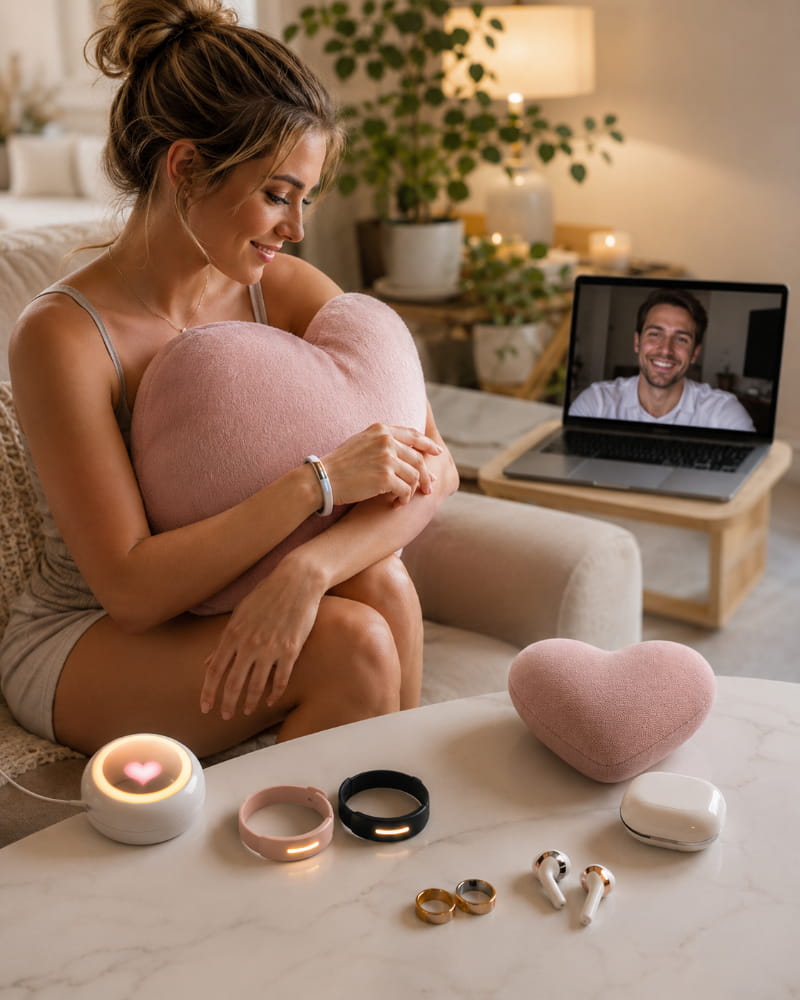
Picture a couple like Maria and Josh, who live eight time zones apart. A single tap on a touch bracelet during Maria’s lunch break might be the only physical connection Josh feels all day. For him, that small buzz says more than a long phone call ever could.
Send Something They Can Actually Feel
Touch is physical, so fight distance with physical objects. Spray your favorite shirt with your perfume or cologne, then mail it to your partner. Write real letters by hand, since paper feels different than a screen ever will. Put together a small care package with a soft blanket, their favorite snacks, and a note tucked inside. Some couples even send matching pillowcases or stuffed animals that soak up scent over time. None of this replaces your arms around them. Still, holding something that smells like you or came from your hands gives their body a small, real signal of closeness, even from far away.

Turn Video Calls Into Real Touch Moments
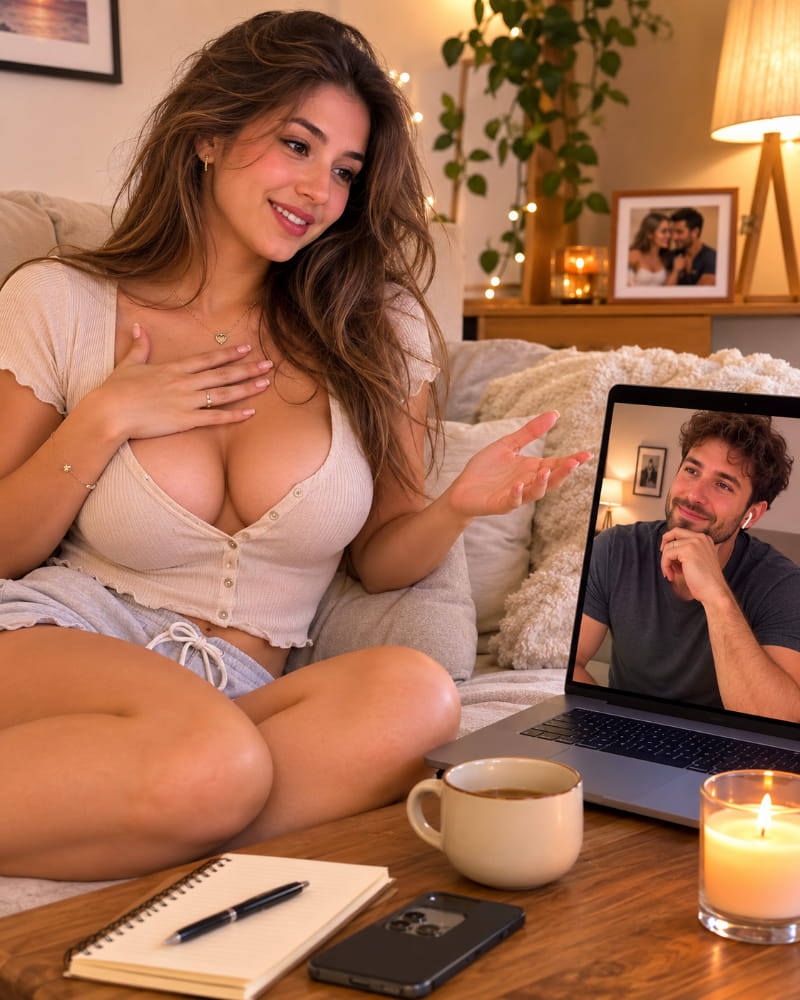
Most couples already use video calls, but few use them well for touch. Try tracing a heart on the screen where your partner’s face is. Blow a kiss on purpose, right at the camera, instead of just waving. Eat dinner together on a call so it feels like sharing a table. Some couples even sleep with a call running quietly, so the last thing they hear is their partner’s breathing. Small, consistent gestures like these often matter more than big, rare ones. Video calls will never equal real touch, but tiny physical cues on camera come surprisingly close.

Build Small Rituals That Feel Like Touch
Small routines build a sense of physical closeness, even without touch. Try saying goodnight at the same time every night, even across time zones. Send a short voice note each morning instead of a text, since hearing your partner’s real voice feels more physical than reading their words. A few couples even light a candle at the same time each evening, just to feel like they are doing something together in the same moment. These small rituals will not replace touch. They do, however, remind your body that your partner is a steady, present part of your day.

Tell Them Exactly What You Need
Your partner cannot read your mind, no matter how much they love you. Tell them clearly what you need, using simple, direct words. Try something like this: “I feel most loved when we plan physical touch into our visits and calls. It would mean a lot if you traced my hand over video, or planned a long hug the second we see each other.” This kind of script feels awkward at first. Still, it works far better than hoping your partner figures it out alone. Psychology Today notes that naming your love language out loud is often the first step toward actually getting it met.
Common Mistakes That Make Physical Touch Even Harder
Some habits quietly make this love language more painful than it needs to be. Watch out for these:
- Waiting for your partner to guess what you need instead of naming it clearly
- Skipping video calls because “it won’t feel the same as real touch anyway”
- Ignoring your other love languages while you wait around for the next visit
- Comparing your relationship to couples who live in the same city
- Turning every visit into a packed schedule, with no time for quiet closeness
- Forgetting to plan your next visit before the current one even ends

Avoiding these mistakes will not erase the distance. It will, however, stop you from adding extra pain on top of a situation that is already hard enough. For more on dodging these pitfalls long term, see our guide on ways to keep your partner interested.
When Your Partner’s Love Language Isn’t Physical Touch
Many couples do not share the same top love language, and that is completely normal. Your partner might feel most loved through words of affirmation, quality time, or acts of service instead. This does not mean they love you less. It simply means you speak different languages, and translation takes real effort from both sides. Ask your partner to stretch toward physical touch sometimes, even if it does not come naturally to them. In return, offer to speak their language too. A relationship works best when both people learn to translate, rather than waiting for the other person to switch entirely.

The Reunion Adjustment No One Warns You About
Here is something almost no one talks about. A 2007 study by Stafford and Merolla found that about one in three long-distance couples break up within three months of finally moving to the same city. The main reason is idealization. When you are apart, you naturally picture your partner and your future together in the best possible light. Once real, daily touch returns, ordinary life can feel disappointing by comparison. Furthermore, some people even feel oddly overwhelmed by too much touch at first, after months of craving it. Neither reaction means something is wrong with you or your relationship.

Permit yourself to readjust slowly instead of expecting instant perfection. Keep some of your long-distance habits, like your goodnight ritual or your daily voice notes, even after you close the gap. Plan a few low-key date nights instead of nonstop, high-pressure outings, and lean on ideas like these to make date night more exciting once routine sets back in. If old distance and disconnection start creeping back in, our guide on how to reconnect with your spouse walks you through rebuilding that closeness step by step. When you are both ready to close the gap for good, our list of naughty things to try together can help you make up for lost time. Most importantly, talk openly about the adjustment as it happens.

When to Get Extra Support
Sometimes the distance, and the missing touch, weighs more than daily habits can fix alone. If you or your partner feel constant sadness, growing resentment, or real anxiety about the relationship, talking to a licensed couples counselor can help. A good therapist gives you tools that go beyond what any blog post can offer. This is not a sign of failure. Actually, it is often a sign that you both care enough to fight for the relationship the right way. Many therapists now offer video sessions, so distance never has to stand in the way of getting support.

For more relationship guidance like this, browse our Intimacy, Marriage, and Relationships sections.
FAQs About Physical Touch Love Language in Long-Distance Relationships
What is the physical touch love language?
Physical touch is one of the five love languages. People who speak this language feel most loved through hugs, hand-holding, and other forms of physical closeness. It is not only about romance or sex. Small, everyday touches count just as much.
Can a long-distance relationship survive if physical touch is your love language?
Yes, it can. Long distance relationships succeed at rates similar to close-proximity relationships, according to research. Success depends more on communication and effort than on your specific love language. You will need extra creativity, but distance alone does not doom the relationship.
What is touch starvation, and is it a real thing?
Yes, touch starvation, also called skin hunger, is a real and researched condition. It happens when you go too long without physical contact. Symptoms can include increased stress, anxiety, and a general feeling of disconnection, even if you talk to your partner every day.
What are the best gadgets for physical touch in a long-distance relationship?
Touch bracelets, long-distance rings, and weighted blankets are popular choices. These tools send a vibration, a gentle squeeze, or another physical signal when your partner reaches out. They work best when you use them daily, as a small habit rather than a rare treat.
How do I tell my partner I need more physical touch?
Be direct and specific. Try saying, 'I feel most loved through touch, so a long hug when we meet means the world to me.' Clear, simple language works better than hints. Most partners want to meet this need once they understand it clearly.
What if my partner's love language isn't physical touch?
That is completely normal, since most couples do not share the same top love language. Ask your partner to stretch toward touch sometimes, and offer to speak their language in return, whether that means words of affirmation, quality time, or acts of service.
Why do so many couples struggle right after they finally live in the same city?
Research shows that about one in three long-distance couples break up within three months of reuniting. Idealization is the main cause. Distance makes couples picture each other in an overly perfect light, and real, daily life can feel disappointing by comparison at first.
How often should long-distance couples see each other in person?
There is no single right answer, since budgets and schedules vary widely. That said, research points to more frequent visits leading to smoother, more stable relationships overall. Even a short visit every few weeks does more good than one long visit every few months.
Final Thoughts

Physical touch love language in long-distance relationships will always come with real challenges, and pretending otherwise helps no one. Still, you now have real tools, backed by real science, to close that gap in meaningful ways. Use the technology, send things your partner can feel, and say your needs out loud instead of hoping they get guessed correctly. Furthermore, remember that distance is temporary, even when it does not feel that way some days. The couples who make it through are not the ones who never struggle. They are the ones who stay intentional, keep talking, and keep reaching for each other, one small touch at a time, until the miles finally close for good.


Through Smart Relationship Tips, Leslie focuses on helping readers better understand relationship dynamics, communicate more effectively, navigate difficult emotional situations, and make more informed decisions about their personal lives. Her writing combines practical relationship guidance with insights from psychology and reputable research sources where appropriate.
Leslie believes that healthy relationships are built through honest communication, mutual respect, emotional awareness, trust, and consistent effort. Her goal is to make complex relationship topics easier to understand while offering advice that readers can realistically apply to everyday situations.
At Smart Relationship Tips, Leslie is committed to creating helpful, reader-focused content that is clear, compassionate, and responsible. When discussing psychology, emotional wellbeing, or research-based topics, the site aims to distinguish general relationship advice from evidence-based information and provide appropriate references whenever possible.
Areas of focus: Dating & relationships • Marriage • Communication • Breakups & moving on • Intimacy • Relationship challenges • Emotional wellbeing
- How to Talk to a Beautiful Woman: 10 Steps That Work - October 8, 2026
- Signs She Is Playing You: 12 Red Flags and What to Do Next - October 7, 2026
- 8 Reasons Most Couples No Longer Enjoy Physical Intimacy (And How to Fix It) - October 6, 2026